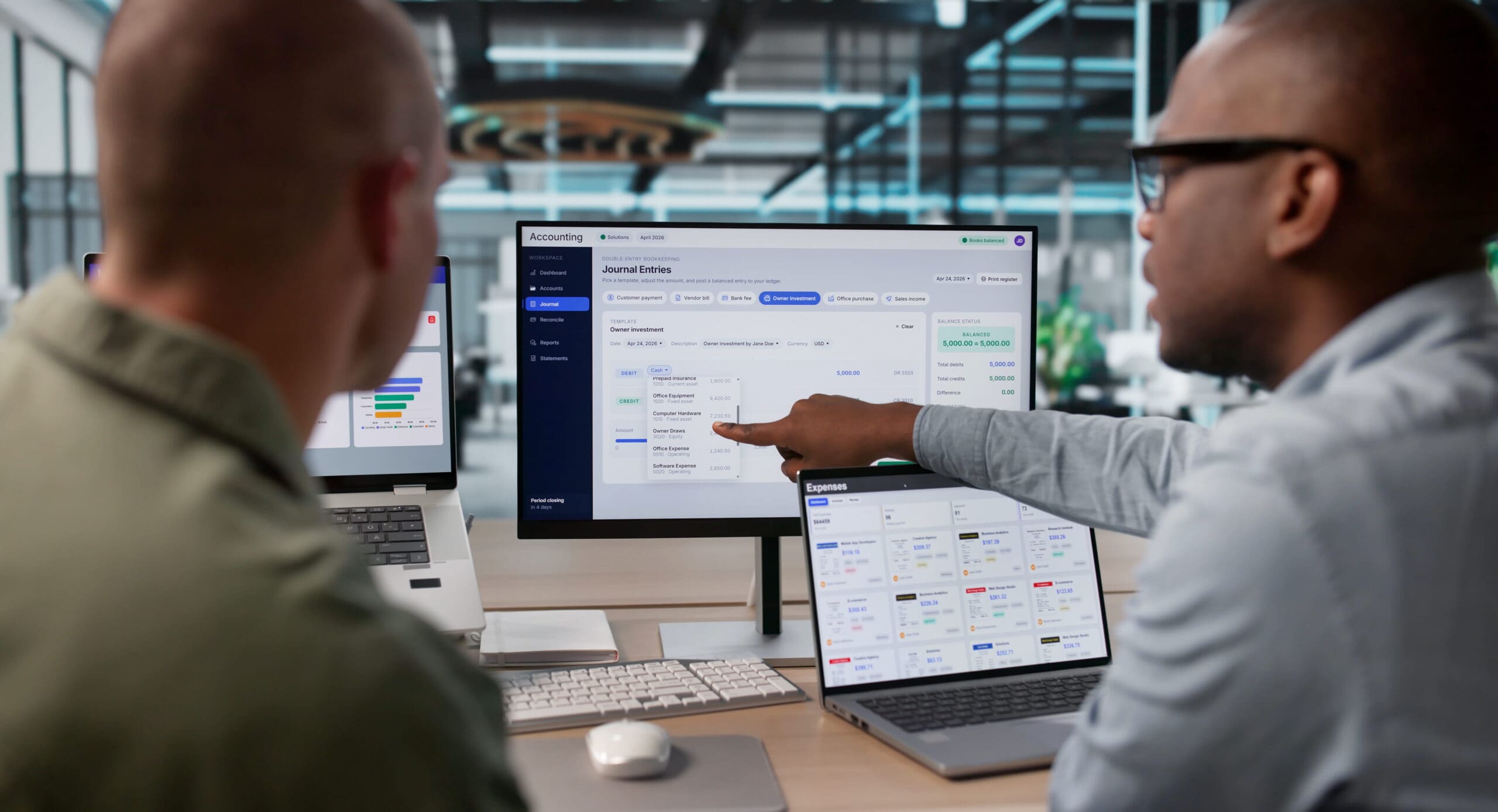
Double entry bookkeeping helps to ensure business accounts are precise and accurate. Double entry bookkeeping involves recording every business transaction in two or more separate accounts. It provides a more comprehensive overview of finances than single entry accounting.
How does double entry bookkeeping work?
Every business transaction involves an equal debit and credit. For example, if you sell a product for £100 and the customer pays straight away, you record a £100 credit to sales (income) and a £100 debit to your bank account (an asset).
Double entry bookkeeping records the debit and credit in separate accounts. As a result, businesses can track the money coming in and out of the business with every transaction.
The debits and credits must always balance across the accounts, meaning if they are different, there is an error in the accounts. This is because a debit offsets a credit and every transaction has an equal and opposite effect.
The five different types of accounts are:
- Assets
- Liabilities
- Equity
- Income
- Expenses
Transactions can be recorded as a debit or a credit in multiple of these accounts. This provides a holistic overview of the impact of a transaction on each account.
Single entry accounting records each transaction once, usually as money in or money out. It’s simpler, but it doesn’t track assets and liabilities, which makes errors harder to spot and gives a less complete picture.
Double entry bookkeeping may take longer than single entry but cloud bookkeeping services can often speed up this process.
Benefits of double entry bookkeeping
In accounting, assets = liability + equity. Double entry bookkeeping allows you to create an accurate balance sheet detailing the company’s financial health.
Double entry also lets you see the positive and negative impact of every transaction on your finances. By comparing accounts, you can easily see if there is a fault in one of the accounts.
At J Sweeney Accountants, we provide professional business bookkeeping services. For more information on our accounting services, email [email protected] or call 01604 950034.